Artist/animator Joebot made these awesome homages to Little Golden Books. He also sells prints of these at his Etsy store.


Just another nerd.
Artist/animator Joebot made these awesome homages to Little Golden Books. He also sells prints of these at his Etsy store.
Ugh — so Goodreads has sold out to Amazon. I can’t blame them for that, although I can blame them for titling their announcement of the sale with “We’re Joining the Amazon Family!” I immediately see visions of Tom Hanks from “That Thing You Do” welcoming Goodreads to the Playtone Galaxy of Stars.
Anyway, according to the press release/blog post about the acquisition from GoodReads, basically this will allow Goodreads to directly integrate with the Kindle (barf) as if Amazon’s constant attempts to upsell Kindle users books wasn’t already extensive enough. But, promises Goodreads CEO Otis Chandler,
It’s important to be clear that Goodreads and the awesome team behind it are not going away. Goodreads will continue to be the wonderful community that we all cherish. We plan to continue offering you everything that you love about the site—the ability to track what you read, discover great books, discuss and share them with fellow book lovers, and connect directly with your favorite authors—and your reviews and ratings will remain here on Goodreads. And it’s incredibly important to us that we remain a home for all types of readers, no matter if you read on paper, audio, digitally, from scrolls, or even stone tablets.
I certainly hope so as I don’t look forward to having to re-enter all of my book information into some other service 6 months from now. Please, please, please, Amazon, don’t pull a Google Reader on Goodreads fans.
The exchange below between Boing! Boing! moderator Antinous and a couple of readers had me laughing out loud. SedanChair pointed out an alleged inconsistency in Boing! Boing!’s approach to intellectual property, claiming the site tends to be IP minimalists when it comes to things like books or music, but acting like IP maximalists when it comes to things like genetic information in the case of the HeLa cell line.
I don’t necessarily agree with that argument but am more interested in how Antinous nicely regurgitates the party line that there is no “Boing! Boing!” You can judge for yourselves, but I suspect if someone made this argument at Boing! Boing! about any other corporation, this argument would be rightly ridiculed at Boing! Boing!.
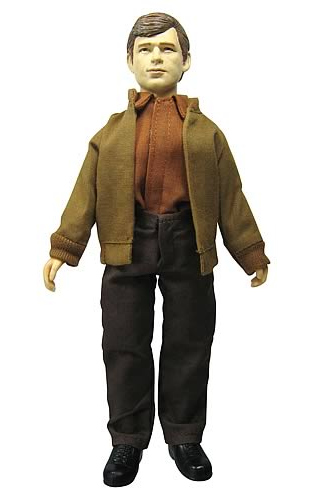
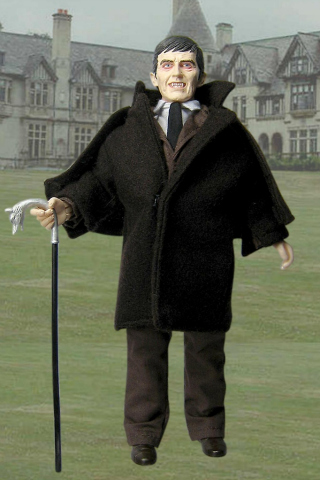
Spectre Toys makes these 8-inch Mego-style Dark Shadows action figures. I’m partial to Willie Loomis myself.



Interesting exchange in a Rock, Paper, Shotgun interview with Dragon Age III writer David Gaider,
RPS: Did you see the recent thing about Remember Me, and the fact that the developer had to shop it around a bunch simply because their main character was female?
Gaider: Yeah, I find it interesting. I call it “accepted industry wisdom.” The thing about accepted industry wisdom is that you can’t question it. Everyone just agrees. It’s weird. The things that the industry decides are treated as incontrovertibly true until someone else comes along and proves them definitively wrong in a way that we cannot ignore. Then, of course, everyone jumps on it.
It’s like back when EverQuest was at its height. I think it had about 800,000 subscribers. At the time, accepted industry wisdom said, “Okay, some other MMOs have tried to come out and jump on EverQuest’s bandwagon and couldn’t do it. Obviously 800,000 subscribers is the MMO market. That’s capped out.” It was accepted. You couldn’t get more than that. Those were the only people who were interested in playing MMOs. Then World of Warcraft came out and it was a game-changer. Everyone said, “Oh, I guess we were wrong.
My hypothesis: the same idiots who are saying “a game with a female lead will never sell” are probably the same morons who are saying “players will love our always-on DRM.”
A Maryland man died in March 2013 from a case of rabies transmitted inadvertently through the kidney transplant he received back in 2011.
The donor had died in 2011 after checking into a health care facility in Florida, and was not diagnosed with rabies. Rabies cases are extremely rare in the United States. From 1995 through 2011 there were only 49 confirmed case of rabies, or an average of less than 3 cases per year.
Because the disease is so rare and the test for rabies takes a relatively long time, organs for donation are not routinely tested for the disease.
The man’s organs went to several recipients in Florida, Georgia, Illinois and Maryland. A Maryland man who received a kidney transplant died from rabies 16 months after the operation. Since the man had no known contact with animals and died from the extremely rare raccoon variant of rabies, the CDC investigated and confirmed that the donor had also been infected with rabies.
This has happened before. There have been several cases around the world where rabies spread via corneal transplant. In 2004, a man in Texas died from what doctors diagnosed as a subarachnoid hemorrhage, but was in fact rabies. Three organ recipients—one who received a liver and two others who each received one of the man’s kidneys—subsequently died from rabies.
The odd thing here is that in the case of the Texas organ donor, each of the organ recipents was admitted to hospital roughly four weeks after the organ transplant with severe symptoms with death following shortly afterward.
But in the case of the Maryland man, the victim didn’t show any rabies symptoms until 16 months after the transplant. As the CDC put it, “Incubation periods exceeding one year are very rare, making this one of the longer rabies incubation periods recorded.”