Open Source Theme Hospital Clone

CorsixTH is an open source clone of Bullfrog’s 1997 game Theme Hospital. Playing the clone requires either a copy of the original game or a copy of the demo version of the game.

As the Google code page for the project notes,

As computers evolve, we risk losing some classic games. Bullfrog’s Theme Hospital, published in 1997, is a classic simulation game, but getting it to run natively on modern operating systems is getting progressively harder.

This project aims to reimplement the game engine of Theme Hospital, and be able to load the original game data files. This means that you will need a purchased copy of Theme Hospital, or a copy of the demo, in order to use CorsixTH. After most of the original engine has been reimplemented in open source code, the project will serve as a base from which extensions to the original game can be made.

Good show. The Bullfrog game I would really like to see get this treatment, however, is Syndicate Wars. Not sure if that game is playable on modern hardware.

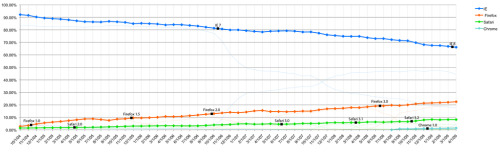
Long Term Browser Usage Trends

Mozilla’s Asa Dotzler made some waves when he posted this graph based on data from Net Applications Browser Market Share report.

Long Term Browser Trends

The most obvious feature is the steady decline of Internet Explorer’s market share from 90 percent in 2004, to just around 66 percent today. Firefox and Safari are the two browsers that have gained most from Microsoft’s losses.

One way to look at this is the glass is 2/3rds empty — the vast majority of Internet users still use crappy Internet Explorer despite all of its problems, security issues, etc. On the other hand, the 1/3 glass full view is that this is a phenomenal achievement. As one of the commenters to Dotzler’s post notes,

It is [a bit depressing that IE’ share is still so high], but then you have to remember these are percentages of the whole web-using population. A few percent a year equates to millions of users switched. When you consider that it has happened without OS-bundling, without huge paid marketing campaigns, and without major web sites mandating particular browsers, then it’s actually an incredibly impressive rate of adoption. Even as it stands, the market share of non-IE browsers is enough to keep Microsoft honest, and force them into a more proactive and standards-friendly approach. IE8 may still be way behind the competition in many areas, but at least it pays far more attention to web standards than any previous IE release, and we have Firefox and Safari to thank for that.

Autonomo.us

Ran across the Autonomo.us blog by accident the other day, and now I’m hooked. With network-related services increasingly becoming a significant part of our day-to-day lives, Autonomo.us highlights and advocates for a free/open source approach to both the software and the data side of such interactions.

Of course if you’ve ever tried to get your data out of a popular network service like Facebook, you know what a daunting task that is. Changing that will require a two-prong strategy of developing open data formats for such services while simultaneously offering open source alternatives to these services that can use those open data formats to avoid lock-in and network effects. There’s no reason there couldn’t be a million social networking sites united by a common, open data format and exchange system rather than two or three walled fortresses that hold your data hostage in order to keep you coming back.

Anyway, if that’s the sort of thing that turns you on, check out Autonomo.us

OpenGoo

OpenGoo is an open source web office package that is designed to be an alernative to something like Google apps. Currently it has modules for text documents, presentations, task lists, e-mail (though that’s still in beta), calendars, web links and contact management.

Last month I downloaded about 8 different similar packages and tried them on my server, but OpenGoo is far and away the best open source office-style package I’ve tested. The interface is actually usable by normal human beings.

There’s a demo of the software in action here.