FireGPG is a GPLed Firefox extension that allows users to encrypt, decrypt, sign or verify the signature of text in any web page. The latest version, released in January 2008, includes a FireGPG API so it could be integrated into specific website (the developers’ focus is on web-based mail).
Month: February 2008
LifeSizeCustomCutouts.com
LifeSizeCustomCutouts.com takes your pictures (digital or analog) and turns them into life-sized cardboard cutouts. Very cool, but not very cheap — an adult-sized 6′ x 3′ cardboard cutout goes for $139.
Toy Vault’s Cthulhu Bust
Toy Vault has a nice looking Cthulhu bust. This goes for $35-$45 online.

Is Wikipedia Editor Fronting for Cult Leader?
The controversial anti-cult activist Rick Ross has an overview of The Register’s article profiling how Wikipedia editor Jossi Fresco has allegedly used his position to shape the treatment of Maharaji/Prem Rawat on Wikipedia. As Ross write,
Jossi Fresco has worked for Prem Rewat, though he is rather vague about his current job, which seems to include using Wikipedia to promote his guru.
Jossi not only has used his editor’ position to stiffle criticism of Prem Rawat, but has also more generally manipulated Wikipedia entries on the subject of cults and related topics. Jossi’s efforts have at times included the Wikipedia page about me (Rick Ross), creator of CultNews.
But here is the real kicker.
If anyone thinks that Jossi Fresco’s actions at Wikipedia represent a “conflict of interest” what can be done?
Well, complaints would likely go to Wikipedia’s “Conflict of Interest Noticeboard.”
But don’t be shocked if you receive something less than a “fair shake” at this Internet location.
After all, Jossi Fresco created this board.
What is interesting about Wikipedia is that on the one hand it is roundly criticized on the one hand for being an encyclopedia that pretty much anyone can edit. But on the other hand, the reality is that only a very small number of users contribute most of Wikipedia’s edits, and those users collectively appear to form a group that is every bit as subject to capture by special interests as any other media outlet.
The New York Times on Going Paperless
The New York Times has a nice overview of the challenges and advantages of ditching paper. According to the NYT’s Hannah Fairfield,
Some homes may no longer have phone books, but many have scanners — and, increasingly, more than one. Flatbed scanners, which most people use for photographs, offer high resolution but are cumbersome for scanning large volumes of paper. New, cheap document-feed scanners that can digitize a stack of papers, receipts or business cards in seconds are becoming popular. Add multiple computers, digital cameras and maybe an electronic book reader, and suddenly paper seems to be on the endangered-species list.
After rising steadily in the 1980s and ’90s, worldwide paper consumption per capita has plateaued in recent years. In the richest countries, consumption fell 6 percent from 2000 to 2005, from 531 to 502 pounds a person. The data bolsters the view of experts like Mr. Kahle who say paper is becoming passé.
Fairfield includes a nice quote from the EFF’s Brad Templeton that he refuses to throw anything away, saying, “I have phone bills from 1983 and taxes from the 1990s. But I have everything scanned, so it takes up no physical space.”
Absolutely. I actually print ream after ream of material — in fact, I’ve joked with some co-workers that I see a printer’s monthly duty cycle as a challenge. But paper is best for short term handling and organizing of ideas. Once its time to store important documents, scan it and shred it.
The NYT cites the Fujitsu ScanSnap which is hands-down the best document scanners I have ever owned. I have scanned tens of thousands of pages worth of documents on it over the past couple years. I still have a flatbed scanner for photographs, kids drawings and other epherma that I want very high quality scans of, but the Fujitsu ScanSnap is perfect for 95 percent of the paper that crosses my many desks.
Like Templeton, I scan pretty much anything that I might remotely want to access later. Why not? I can buy a 750gb hard drive for $175 off of Amazon.Com. Why not just scan everything. Personally, I can recount numerous times where being the only person who had a copy of a long forgotten memo or report was extremely helpful.
One tool the New York Times didn’t mention, but that I find essential, is DTSearch. Between e-mail, PDF scans of documents, text files, etc., I’ve easily got 400gb worth of archived data. Finding that report I kind of remember from 2002 becomes very difficult. But DTSearch will fully index all of that data and provides some very sophisticated ways to search, including fuzzy logic searching, synonym searching, etc. It ain’t cheap — the personal desktop version is $199 — but it is the best full text search product for Windows, period. It has saved the day for me on numerous occasions.
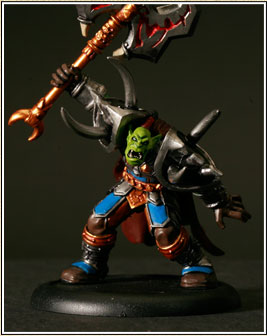
World of Warcraft Collectible Miniatures Game
I haven’t even had time to sort and organize all of my World of Warcraft cards from the CCG when Upper Deck goes ahead and announces a collectible World of Warcraft Miniatures Game.