Think Geek is selling these Super Mario Galaxy Super Balls for $3.99 each (the catch is their randomized so you can’t order a specific one).
*
Just another nerd.
Think Geek is selling these Super Mario Galaxy Super Balls for $3.99 each (the catch is their randomized so you can’t order a specific one).
*
Finkbuilt has an excellent series of posts describing the creation of this awesome-looking custom Planet of the Apes-style tunic.

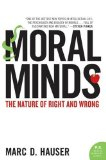 Marc Hauser’s book Moral Minds purports to travel much the same territory for morality that books like Steven Pinker’s The Language Instinct does for language — he argues that human beings are born with an innate moral capacity that is separate and distinct from other faculties (morality is not, for example, simply a byproduct of a general rational ability).
As Hauser sums it up in the prologue,
I argue that our moral faculty is equipped with a univeral moral grammar, a tookit for building specific moral systems. Once we have acquired our culture’s specific moral norms — a process that is more like growing a limb than sitting in Sunday school and learning about vices and virutes — we judge whether actions are permissible, obligatory, or forbidden, without conscious reasoning and without explicit access to the underlying principle.
Moreover, Hauser believes that we should go beyond merely describing such an innate moral faculty, but that in addition the existence of said moral faculty should be taken into account in policy making.
But does the book actually deliver? Briefly, no. The author complains in an afterword in the paperback version of the book about an early negative review from the late Richard Rorty in the New York Times (Hauser claims that the review was especially insulting because, Hauser claims, it was clear that Rorty hadn’t read the book). Having slogged through the book, I thought Rorty was pretty much spot on with his criticisms. Rorty wrote,
The exuberant triumphalism of the prologue to “Moral Minds” leads the reader to expect that Hauser will lay out criteria for distinguishing parochial moral codes from universal principles, and will offer at least a tentative list of those principles. These expectations are not fulfilled. The vast bulk of “Moral Minds” consists of reports of experimental results, but Hauser does very little to make clear how these results bear on his claim that there is a “moral voice of our species.”
. . .
Hauser thinks that Noam Chomsky has shown that in at least one area — learning how to produce grammatical sentences — the latter sort of circuitry will not do the job. We need, Hauser says, a “radical rethinking of our ideas on morality, which is based on the analogy to language.” But the analogy seems fragile. Chomsky has argued, powerfully if not conclusively, that simple trial-and-error imitation of adult speakers cannot explain the speed and confidence with which children learn to talk: some special, dedicated mechanism must be at work. But is a parallel argument available to Hauser? For one thing, moral codes are not assimilated with any special rapidity. For another, the grammaticality of a sentence is rarely a matter of doubt or controversy, whereas moral dilemmas pull us in opposite directions and leave us uncertain.
The book never comes close on delivering on the prologue’s claim about an innate moral faculty. Instead, much of the book is filled with a mind numbing discussion of Hauser’s particular framing of moral philosophy interspersed (which is Rawlsian, though he doesn’t make a convincing case even on that) with long catalogs of animal experiments that are somehow supposed to tie-in to the philosophy but never quite seem to (which isn’t to say that some of the experiments aren’t fascinating, they just don’t ever come close to demonstrating what Hauser sets out to convince the reader of).
All-in-all this book was bloody awful. Someday someone is going to write a classic book on the sociobiology of human morality. This, however, is not it.
 Superhero Times has a plot synopsis of the Captain America movie currently in preproduction but scheduled for May 2011 ahead of The Avengers movie currently slated for July 2011.
Born during the Great Depression, Steve Rogers grew up a frail youth in a poor family. Horrified by the newsreel footage of the Nazis in Europe, Rogers was inspired to enlist in the army. However, because of his frailty and sickness, he was rejected. Overhearing the boy’s earnest plea, General Chester Phillips offered Rogers the opportunity to take part in a special experiment… Operation: Rebirth. After weeks of tests, Rogers was at last administered the ‘Super-Soldier Serum’ and bombarded by ‘vita-rays.’ Steve Rogers emerged from the treatment with a body as perfect as a body can be and still be human. Rogers was then put through an intensive physical and tactical training program. Three months later, he was given his first assignment as Captain America. Armed with his indestructible shield and and battle savvy, Captain America has continued his war against evil both as a sentinel of liberty and leader of the Avengers.
Marvel’s done a fair job with Spider-Man, and knocked it out of the park with Iron Man and The Incredible Hulk so maybe I’m being too pessimistic, but I can’t imagine them seriously pulling off a Captain America film. Frankly, the character’s a bit goofy — definitely a creature of its time. I fear the movie will be less like Iron Man and more like The Punisher (another character that on its face simply will never work — and hasn’t — on film).
Part of the problem is we’ve already had badass superpatriots with bulging muscle movies. After all a character like Rambo is simply Captain America minus the goofy costume and shield.
On the other hand you can’t do an Avengers film without Cap so it
Coming in March 2009 for about $50/each, radio controlled flying U.S.S. Enterprise and Romula Bird of Prey.

I don’t frequently find myself in complete agreement with WordPress blogging guru Lorelle VanFossen, but I completely agree with her that closing comments on a blog post is a Very Bad Idea (in fact I made an argument against that practice here last July).
The primary reason that people appear to close comments is they think it somehow cuts down on the amount of spam, but VanFossen argues it won’t make much difference,
The “old posts” myth about comment spam is that comment spammers hit older posts more than current posts. This is also not true. Comment spammers will hit EVERY post they can. Comment spam bots and human spammers don’t check the date of the post before they hit, thinking, “Hmmm, this one is at least six weeks old, ripe for spamming.”
Use the right keywords in your blog post and you can get comment spam in the time it takes to hit Publish and load the post to see the results. Words like credit, foreclosure, mortgage, finance, debt, and such attract comment spam faster than flies to honey. An article I published here on the Blog Herald on Give Credit When Credit is Due: Skip The Middle Man was slammed by comment spam within seconds, all aimed at promoting the get-rich-quick and out-of-debt-over-night schemes. The article had nothing to do with any of these things, but keywords are keywords in the eyes of spammers.
But even if it does cut back on a few spam, it causes much more problems by sending a negative message to readers (and, as I argued, often prevents peoiple from posting relevant information that corrects or updates a post).
On another blog using an auto-closing comment WordPress Plugin, they had asked for help with only one unhelpful reply of commiseration. Since I had the answer to their problem, I wanted to let them know in case they were still battling with this issue. Without any way to comment, nor a direct link to their comment form, I gave up. Guess they didn’t need my help after all.
I come across that sort of situation all the time. On the other hand, since I never close comments I often find people will post insightful answers to questions years after I post something. For example, seven years after I wrote a blog post about the source of a claim about World War II, a vistor finally posted the answer the other day in a comment.