GT Zip Bags for Archival Storage of Action Figures

Action figure site One Per Case points out that many people store action figures in zip lock bags because they are so convenient and hold accessories, etc. The problem, however, is that most zip lock bags you can buy in stores are made out of plastic that over time is going to expose toys and other stored items to acidic compounds.

The solution is to use non-acidic bags. GZ Zip sells Ultra Clear 2 Mil Bags that,

. . . [are] made from polypropylene [and] are safe for archiving and conservation. Polypropylene is the most widely accepted commercial archival storage material in the United States. It is recommended by both the International Organization for Standardization ISO 10214:1991(E) Sect 4.3 and the American National Standards Institute ANSI IT9.2-1991 Sec 3.3. The polypropylene used in our Ultra Clear Bags is naturally acid free and lignin free and conform to PAT ISO standard 18916.

The cost isn’t too expensive either. One thousand 4″ x 6″ bags are just $20.99 plus shipping.

Best Way to Build Large (>30TB) Personal Networked Storage?

I have a lot of data, most of it which is stored and backed up offline. What I’d like to do is set up a large network storage system in my basement so I could bring all of that data online and do something useful with it.

I’ve got about 20tb worth of screenshots and videos archived and backed up to hard drives. I’ve got another 1tb worth of personal documents, photos, etc. backed up and connected to my main. In my basement I’ve got a Windows Server with 6tb of storage that holds my music, DVDs, comic books and ebooks.

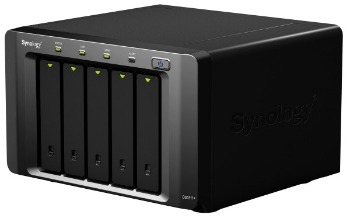
So what I was thinking of doing was buying a Synology DS1511+ 5-bay NAS, two of the Synology 5-Bay expansions for the DS1511+, and 15 3tb hard drives. At today’s prices, the total for that would be $4,213, and give me 36tb of storage given the way I’d end up configuring it with RAID. Double that price to purchase the same hardware to mirror the storage offsite and I’d be looking at $8,426 total for an end cost of $234/terabyte.

Are there better/cheaper ways to build the sort of storage solution I’m looking for?

Kingmax’s 64gb Micro SDXC Card

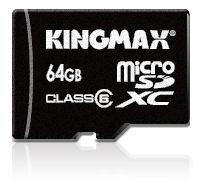
Taiwan-based Kingmax issued a press release in May claiming to unveil the largest Micro SDXC card yet at 64gb.

Of course this is just a press announcement, so Kingmax 64gb Micro SDXC cards aren’t actually on sale anywhere in the world yet. And no pricing has been given. But, hey — there’s a press release, right? Good luck storing any data on that!

The obvious application for these is in smart phones. These cards are the same form factor as Micro SD cards, but the spec current generation of Micro SD cards are based on arbitrarily limits their size to 32gb. Eventually, though, smart phone manufacturers are going to start adding SDXC compatibility — the Thunderbolt was originally rumored to have SDXC, but shipped with plain old SD. There are already companies offering exFAT (the file system used by SDXC) solutions for Android.

The cool thing is just how much data is ultimately going to be available locally on handheld devices. When you’ve got a phone 5 years from now that has 128-256 gb of data storage on it plus pervasive 4G access plus grapics rivaling today’s console systems, you’ve got people using their phones for things we can’t even imagine today (and one thing Android better get working on pretty damn quick is encryption across the device).


World Backup Day – Backing Up Gmail from Windows with MailStore

I’m normally a fanatic about backing things up, but one area I was backsliding a bit was in backing up my GMail account. I tried about a dozen different methods of backing up my account, but none of them worked very well.

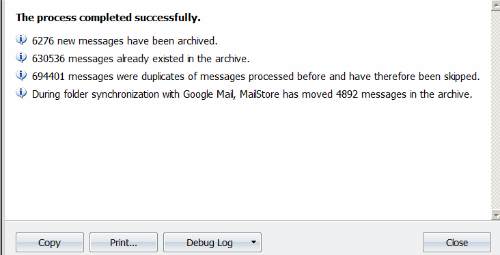
Then I ran across MailStore for Windows. Free for personal, home use, MailStore is the only method I tried that actually backed up all of my 700,000 or so messages in GMail. It wasn’t perfect — I had to run it several times over about a month before it finally was able to grab all 700k messages, but it was far better than anything else I tried.

MailStore stores your messages in its own local database, which works well enough for immediate purposes, but is hardly a long-term solution for archiving email in case of a storage disaster.

Fortunately, MailStore does let the user export all messages to individual .eml files. That takes quite a while with 700k messages, as you might imagine, but once its finished I end up with a directory and subdirectories with each of my email as an individual file that can be accessed in any text editor. I compress that entire directory into a single archive file once a month and throw it on my file server which does have a longstanding system for backups so that now I have multiple versions of all my email in multiple physical locations just in case.

One less thing to worry about.

What Sort of Time Frame is Realistic for Large Scale Data Storage?

Paul Querna wrote an interesting post back in June about “forever storage” — data storage that could potentially be stable for civilization-spanning eras of time,

Not everyone will believe we can keep growing technology at the pace we have, nor that we might be able to stop death and diseases in our generation, but I do believe we are in the age where information created and stored today, could survive forever.

There are small technical challenges, like how would you write to media intended to last thousands of years, where would you store it all, and how would you pass on access to this data to whomever you desire, but I think they are all solvable.

If you can store your body in cryogenic storage for thousands of years, why can’t you store your data; Not just for yourself, but for your descendants.

One of the interesting questions here is just how well previous civilizations have done at information preservation. On the one hand, I can still read the full text of Sophocles’ Oedipus the King even though it was written about 2,400 years ago. On the other hand, even though he was one of the most famous and successful Athenian playwrights, only 7 of the 123 plays he wrote survives in complete form.

It would be interesting to estimate what percentage of written data generated by civilizations prior to the 15th century survived to be readable today. I’d be surprised if more than 5 percent of such material survived, and suspect something like 0.5% is excessively optimistic (if anyone knows of any published estimates of long-term information survival, please send me a link or reference).

Add to that we’re relying primarily on magnetic-based form factor-based hard drives for large scale storage which is technology that has been around for just 32 years now.

One possibility is to use something like the Rosetta disc or some of the physical, non-dye based optical solutions which should last a very long time, though at exorbitant prices (there’s no way I’m putting my 25tb or so personal data archive on them).

One of the commenters to Querna’s post highlights the data storage of memristors which are capable of storing data at much higher densities than existing hard drives and are nonvolatile (sort of like flash memory today). Moreover, Stanley Williams — who first invented the memristor — has said that the lifespan of memristors could be for periods far longer than mere millenia. Now all we need are for memristors to become cheap and widely available!

And don’t forget that even with memristors or something like it, at the moment your data is stuck in this lonely gravity well in some third-rate planetary system that is vulnerable to a number of potential catastrophes. What we need are autonomous, reproducing memristor-bots that can spread that data archive throughout the universe (now that’s cloud-based computing).
Synology 1511+

Engadget notes the Synology 1511+ has been upgraded so it will accommodate the 3tb drives that are starting to show up. This is a 5-bay NAS that goes for about $900-$950 without disks. The nice thing about the Synology is that you can buy a 5-bay storage expander for about $500, and the 1511+ can support up to two of those. So, potentially, this thing can store 45tb for about $4,800.

Oh yeah, I’m getting one of these.