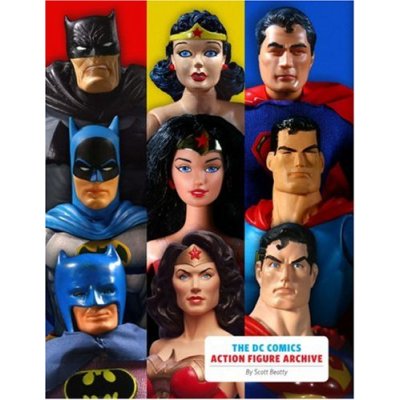
 This is one book that I’ve been waiting for almost a year to come out. Scott Beatty is a former editor at Toyfare magazine and a sometimes comic book writer. He talked Chronicle Books into letting him do a coffee table size book chronicling every DC action figure — 1,400 in all with 600 full color photographs.
The book is arranged alphabetically, with each action figure entry containing details on the name of the company that produced it, the name of the series it was part of, the releae date, scale, articulation, accessories and occasional additional notes. If you’re an action figure fanboy, this is like a drug. Please, oh please, can I get a Marvel version too?
Not that the book isn’t without problems — in fact it is getting slagged on Amazon at the moment. The book’s critics have two complaints.
First, the book is about action figures — as it says on the title — and so doesn’t include any DC-related toys prior to Ideal’s Captain Action which was released in 1966. This upsets folks who apparently wanted a more comprehensive look at DC collectible toys, but the scope of the book is made fairly clear in its title.
Second, and more serious, there are mistakes in the book. In at least one instance, the Captain Action series is ascribed to Mego. Some of the photographs, especially of the earlier action figure, are not accurate (they appear to show modified/damaged action figures). And despite the book’s claim to completeness, there are omissions. The ’52’ Isis figure is include, for example, but the Mego Isis is nowhere to be found.
Even with its faults, however, this is still an incredible volume, and well worth the $26 asking price at Amazon.