Another must-have t-shirt from Split Reason . . .
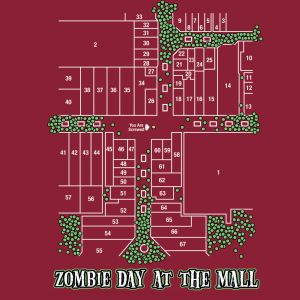
Just another nerd.
Another must-have t-shirt from Split Reason . . .
Sideshow Collectibles is accepting pre-orders for this 1:4 scale Blackbeard figure. Arrr, but it will cost ye $399.99.

Reuters reports on a four-year study of 600 U.S. adults whose average age was 72 when the study began. After four years, adults who had at least one parent who lived to be 100 had statistically signfiicant lower mortality rates as well as lower risk of diabetes, heart attack and stroke.
“These findings reinforce the notion that there may be physiological reasons that longevity runs in families and that centenarian offspring are more likely to age in better cardiovascular health and with a lower mortality than their peers,” the researchers wrote in the Journal of the American Geriatrics Society.
. . .
Over the next four years, Adams and her colleagues found, children of centenarians were 81 percent less likely to die and significantly less likely to develop cardiovascular problems or diabetes.
Only 0.7 percent suffered a heart attack during the study period, compared with 3.5 percent of the comparison group. Similarly, 1 percent of the centenarian group had a stroke, versus 6 percent of their peers.
Meanwhile, diabetes was newly diagnosed in just over 5 percent of the comparison group, but only 0.8 percent of the centenarian group.
People in my family tend to live very long (my great grandmother lived to 100) except for the folks who do themselves in with poor diet, lack of exercise, tobacco use, etc., so I’m hopeful I’ve inherited whatever genes helped them there.
Ryan Greenberg has written a survey and analysis of what Jason Kottke calls “single serving sites” — sites that are typically just a single page, and occasionally just a single word such as HasTheLargeHadronColliderDestroyedTheWorldYet.com which currently just displays the word “Nope.” Greenberg writes,
Dozens of tiny, single serving sites provide a venue for pop culture references, inside jokes, art displays, collective action, bids for peer approval, humor, and advice. Collectively they offer a perspective on the web as a platform for a unique brand of storytelling.
. . .
Having presented these data, the most interesting and difficult question remains unanswered: why? As a whole, the SSS movement may be a commentary on the hyper-specialization of sites. Although the most trafficked sites on the Internet remain those with broad functionality, the recent history of the Internet has been one of increasing specialization. YouTube is the site for video, Flickr for pictures, Delicious for collecting bookmarks, MegaUpload and others for swapping files, and so on. With the proliferation of specialized sites increases, SSS have extended this concept to its logical extreme: sites dedicated to performing a single, ultra-specialized function, or none at all. Clearly some market conditions contributed to the environment where SSS could thrive. In 1999, domain name remained a monopoly, and registering a .com domain with Network Solutions cost $35 for a year. Now customers can register domains with a variety of providers at prices that range from free to $10 a year. The amount people will pay to make a joke or participate in a trend obviously varies, but it seems likely that there is some threshold for many between $35 and $5 that makes dedicated domain names more tenable.
. . .
One factor that clearly motivates SSS creation is the ability to participate in a loosely connected network of creativity. Media that predate the Internet offer some manner of interaction: magazines and newspapers accept letters to the editor, people can discuss material in local communities, and talk radio allows listeners to call in. The democratized nature of publishing on the Internet allows consumers to become producers on a dramatically larger scale. . . . Single serving sites allow people to showcase their sense of humor or make a joke on the world stage. Even if only a select group of people actually do navigate to a site, the fact that millions of people could see the site changes the nature of the creation in ways that we are only beginning to understand.
Well worth reading the whole thing.
DC Direct recently announced this Green Lantern Mini-Neon sign (7″ wide by 9″ tall) shipping in August 2009 for $89.99.

Suspense.net has a thorough list of clichés that you should avoid like the plague.