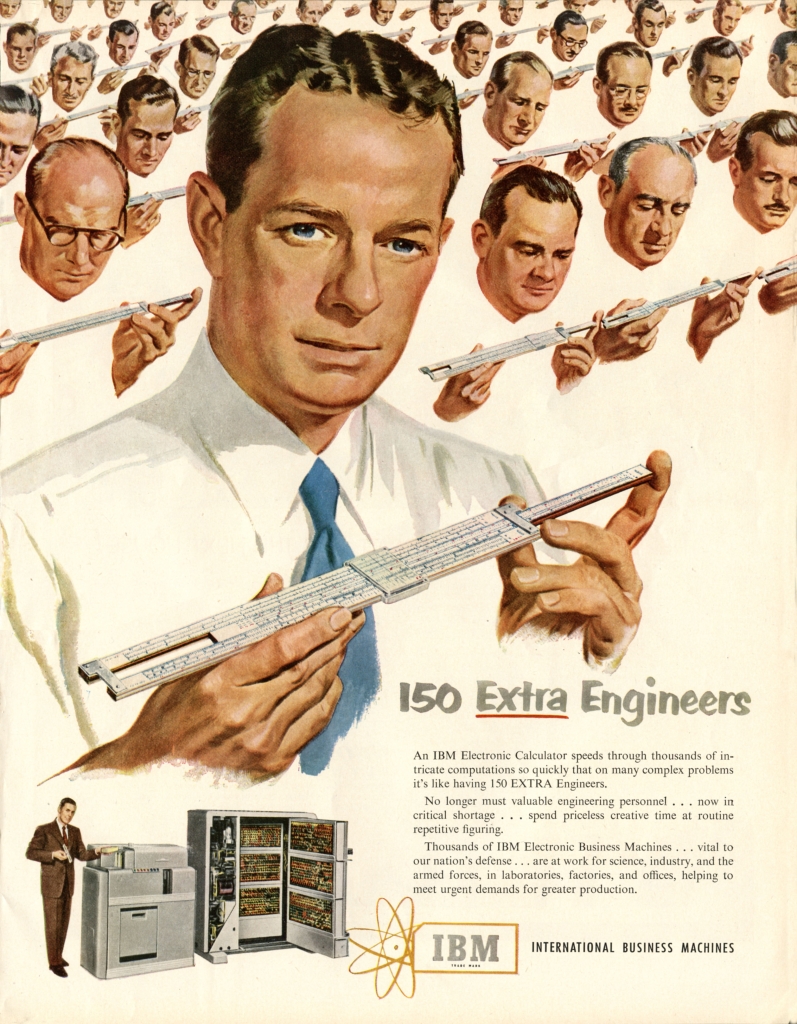
IBM Ad, 1951–150 Extra Engineers!
Just another nerd.
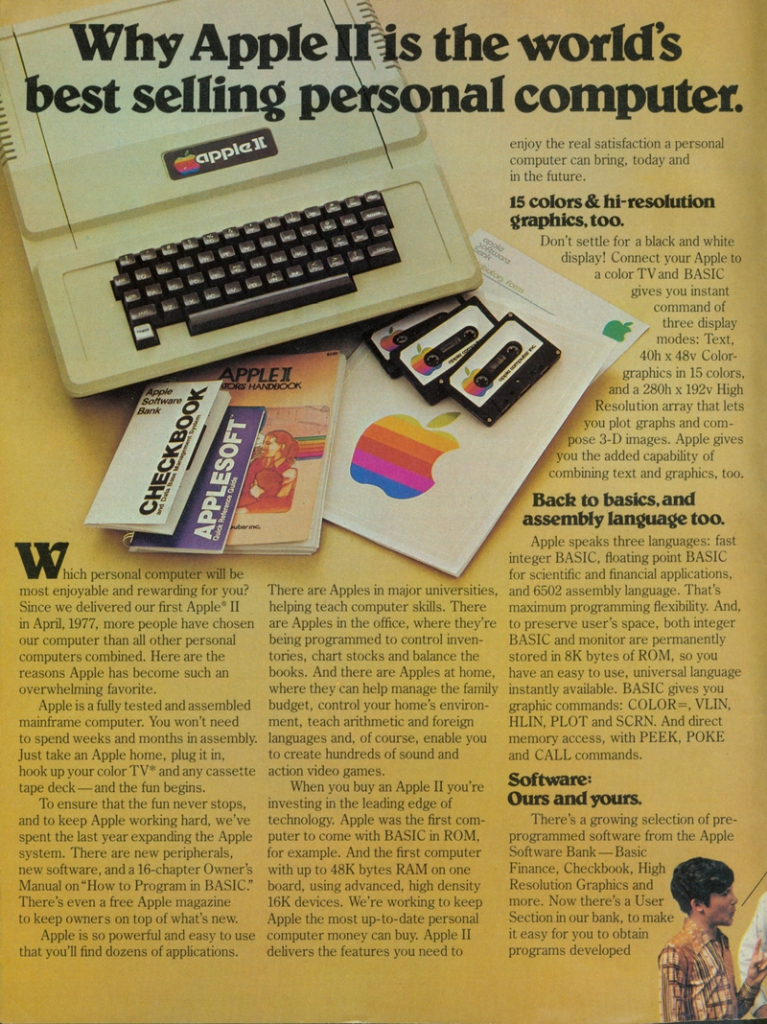
According to Wikipedia, the IBM 701 was released on April 29, 1952, and IBM would install a total of 19 of them (one was installed in IBM’s world headquarters).
Aviation Week for 11 May 1953 says the 701 rental charge was about $12,000 a month; American Aviation 9 Nov 1953 says “$15,000 a month per 40-hour shift. A second 40-hour shift ups the rental to $20,000 a month.”
. . .
The system used vacuum tube logic circuitry and electrostatic storage, consisting of 72 Williams tubes with a capacity of 1024 bits each, giving a total memory of 2048 words of 36 bits each. Each of the 72 Williams tubes was 3 inches in diameter. Memory could be expanded to a maximum of 4096 words of 36 bits by the addition of a second set of 72 Williams tubes or (later) by replacing the entire memory with magnetic-core memory. The Williams tube memory and later core memory each had a memory cycle time of 12 microseconds. The Williams tube memory required periodic refreshing, mandating the insertion of refresh cycles into the 701’s timing. An addition operation required five 12-microsecond cycles, two of which were refresh cycles, while a multiplication or division operation required 38 cycles (456 microseconds).
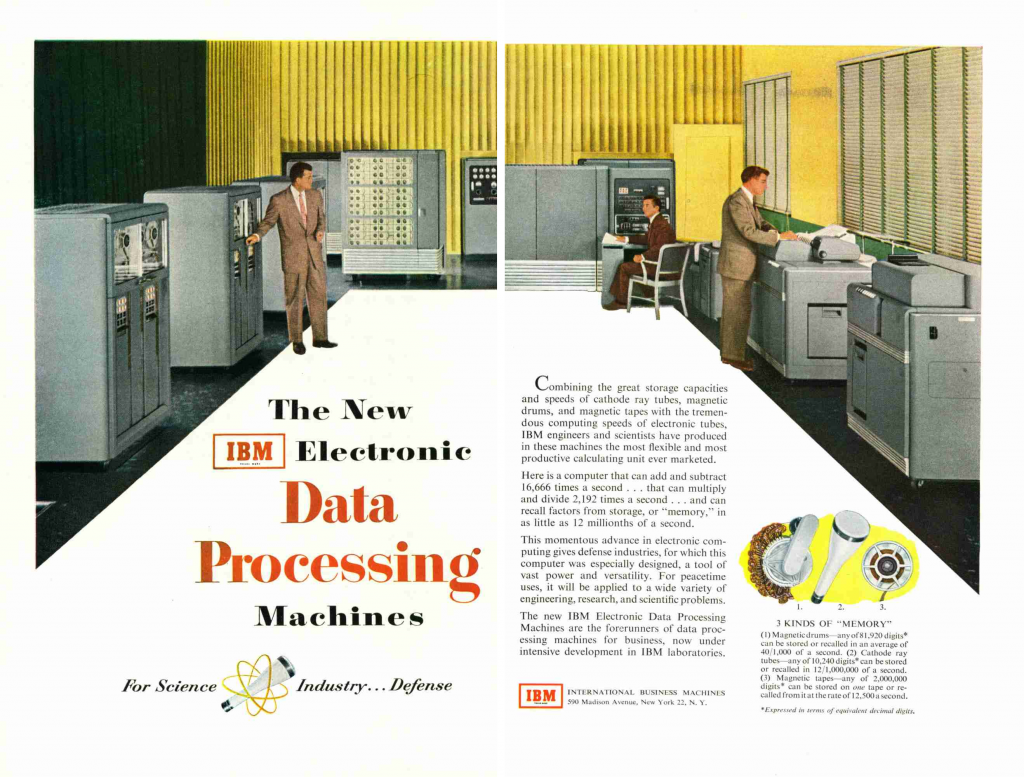
Part of the inhumanity of the computer is that once it is competently programmed and working smoothly—it is completely honest.
–Isaac Asimov, Change! Seventy-One Glimpses of the Future, 1981, p.17.
Part of the inhumanity of the computer is that once it is competently programmed and working smoothly—it is completely honest.
–Isaac Asimov, Change! Seventy-One Glimpses of the Future, 1981
Pretty much, must watch/read (transcript below):
http://youtu.be/yYqkU1y0AYc
The Coming War on General Computation
Cory Doctorow [email protected]
Continue reading “Cory Doctorow: The Coming War on General Computation”