Blizzard Wins Default Judgement Against WoW Private Server

Back in October 2009, Blizzard sued Alyson Reeves over the private World of Warcraft servers she offered through her company, Scapegaming. On August 10, Blizzard won a default judgement against Reeves/Scapegaming and was awarded $88.5 million.

Now World of Warcraft private servers are fairly common, and some are fairly interesting variants that do things Blizzard would never be able to do and remain commercially viable (for example, running servers that replicate what the game was like before the Burning Crusade/Wrath of the Lich King expansions). For the most part, Blizzard doesn’t appear to have gone after private servers in general, presumably because they serve an extremely small niche market.

But unlike most private servers, Reeves/Scapegaming was run as a for-profit business that made (apparently a lot of) money off of microtransactions for its private servers. That’s just asking to be sued into oblivion.

Hopefully this won’t lead to a wholesale backlash by Blizzard going after every private server out there, but given Activision’s pressure to monetize, monetize, monetize across all of their products, it seems more likely that the days of openly running WoW private servers are numbered.

Update: here is a 1.3mb PDF version of the original complaint filed by Blizzard against Reeves. In it, Blizzard alleges that Reeves/Scapegaming collected approximately $1.5 million in donations from players accessing its private servers

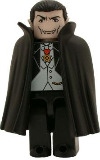
Universal Monsters Kubricks

One of the few things I collect beside superhero figures are Universal Monster stuff. These Universal Monster Kubricks look awesome. However, what I’d really like to see is a wave of figures from Freaks — I would totally buy the entire line just to sit around chanting “one of us” at them.

Post Revision Display

Post Revision Display is a WordPress plugin created by D’Arcy Norman at the instigation of Scott Rosenberg who wanted a way to publicly display any revisions made to a post after publication. The plugin does just that, adding no-index/no-follow metatags in the revisions so that Google and other search engines don’t end up indexing the revisions as well.

MonkeySphere – Using OpenPGP to Route Around Broken Web Security Model

The Monkeysphere Project is a project to use OpenPGP to securely identify servers in web browsers and elsewhere that routes around the growing potential problems with certificate authentication. As The Monkeysphere website sums it up,

Everyone who has used a web browser has been interrupted by the “Are you sure you want to connect?” warning message, which occurs when the browser finds the site’s certificate unacceptable. But web browser vendors (e.g. Microsoft or Mozilla) should not be responsible for determining whom (or what) the user trusts to certify the authenticity of a website, or the identity of another user online. The user herself should have the final say, and designation of trust should be done on the basis of human interaction. The Monkeysphere project aims to make that possibility a reality.

. . .

When you direct the browser to an https site using the Monkeysphere plugin and validation agent, if the certificate presented by the site does not pass the default browser validation (using standard, hierarchical X.509), the certificate and site URL are passed to the validation agent. The agent then checks the public keyservers for keys with UIDs matching the site url (e.g. https://zimmermann.mayfirst.org). If there is a trust path to that key, according to your own OpenPGP trust designations, the certficate is considered valid, and a browser ‘security exception’ is put in place to allow connections to the site.